
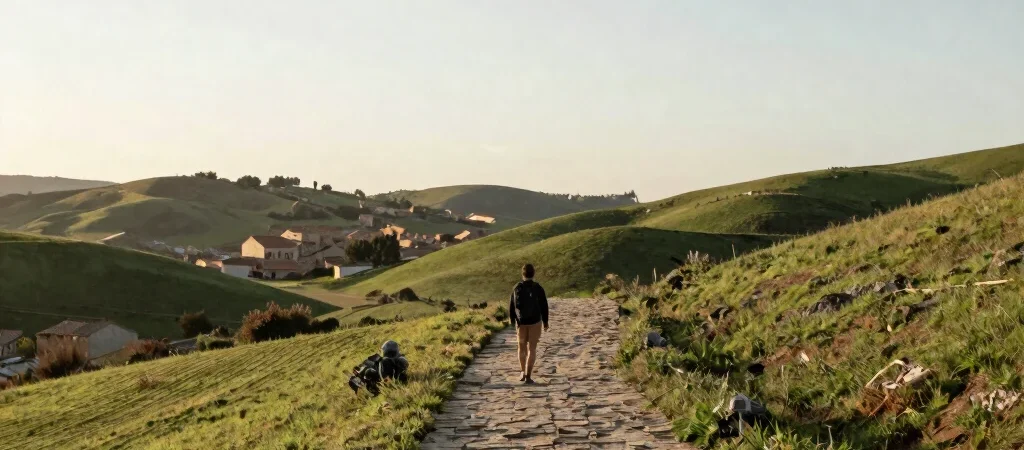
Start in Saint-Jean-Pied-de-Port and the Camino Francés announces itself with a climb: the path rises toward the Pyrenees before dropping into Spain. But the character of the walk keeps shifting long after the mountains. Navarra’s villages, the broad horizons of the Meseta, and Galicia’s wooded lanes make the same route feel like several different journeys joined together.
The Route Changes Its Register
The early stages ask for attention to the ground beneath your feet. Later, the Meseta opens the view, and a day can seem to stretch between one settlement and the next. In Galicia, shade and rolling terrain bring a different texture to the final approach toward Santiago.
Waymarks help keep the route in view, but they do not make every day feel the same. Weather, a slower morning, or an unexpected stop can change how far a walker wants to go. That flexibility is part of the story: the route is shared, while each person’s days remain their own.
Let the Villages Set Pace
A village is more than a point on a map between two walking stages. It can be where a walker rests, finds a meal, or notices how local life gathers around a main street and a church square. These pauses give the miles a human scale.
The Camino Francés is often described by its destination, but its character is built along the way. Follow the route through its changing regions, and the useful question becomes less “How quickly can I get there?” and more “What did this stretch ask me to notice?”